
Sustainability is no longer a choice, but a business standard
This summer once again showed that climate change is no longer a distant threat to the future, but a reality…


5 min
 |
Veronika Mikec je redna študentka, pisateljica blogov in bodoča revolucionarka. |
|
Veronika Mikec is a full-time student, writer, and future revolutionary. |
Have you ever wondered how many thousands of advertisements you actually overlook in a single day? We have reached a point where the digital space is bursting at the seams, and our brains have become masters at ignoring anything that smells of a sales pitch.
When a company thinks about where to invest its hard-earned money, it often faces a dilemma: bet on quick clicks, buy expensive advertising space in the media, or actually put something physical in the hands of a customer. Today, when everything disappears with a single swipe, physical tangibility is gaining weight.
Promotional gifts are not merely “products with a logo” — they are those rare moments when marketing actually touches a person, literally and emotionally.
Modern companies today choose between different marketing channels based on numerous factors, among which the key ones are the demographics of the target audience, budget, and the specific goals of the campaign.
The decision-making process often begins with an analysis of where their ideal customer spends most of their time. Is it on social media, where fast visual content dominates, or is it at business events, where personal connections and tangible proof of quality matter?
Companies must be aware that choosing the wrong channel does not only mean losing money — it can also lead to a misperception of the brand in the eyes of the public.
When we talk about effectiveness in the context of advertising and promotion, we must not look only at bare numbers such as clicks or the number of ad impressions. True effectiveness means the degree of influence that a particular message has on the recipient, and the longevity of that influence.
Effectiveness is measured through brand recognition, the recall of a company’s name at the moment of a purchasing decision, and above all through a change in consumer behavior. Those who succeed in establishing a personal connection gain a significant advantage over the competition.
Digital advertising has completely transformed the way companies communicate over the past two decades. Companies can display their ads to specific users based on their interests, search history, age, and even current location. This allows for cost optimization, as the ad is shown only to those who are highly likely to be genuinely interested in the product.
However, since we now encounter banners, sponsored posts, and auto-playing videos at every turn, our brains have developed a natural defense against these stimuli. This means that a large portion of digital impressions are in fact ineffective, as users no longer notice them or actively block them with software.
Digital advertising is also plagued by the problem of short attention spans. Users scroll through content online extremely quickly, which means an ad has only a second or two to capture their attention. Even if an ad achieves its purpose and is noticed, these impressions are often quickly forgotten.
Traditional media such as television, radio, and print were for decades considered the gold standard of advertising. There are still certain segments where these channels work, particularly when addressing an older population or building brand prestige.
The main challenges of traditional advertising are linked to high entry costs and the extremely difficult measurement of results. Producing a television commercial and purchasing airtime in national media requires enormous investment, while the company can rarely determine precisely how much of its sales were a direct result of a specific broadcast.
Unlike digital tools, where every click is recorded, viewer and readership ratings are only approximations, making it difficult to calculate the actual return on investment. For small and medium-sized companies, these channels are often out of reach or simply too risky given the expected impact.


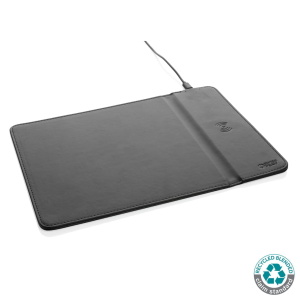
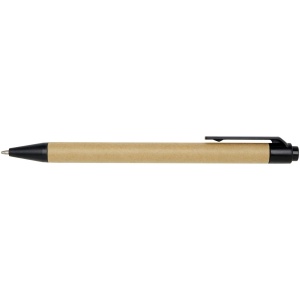

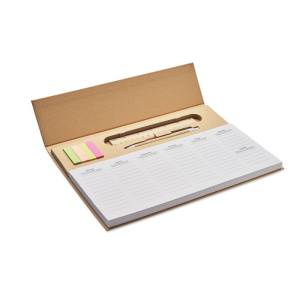


Promotional gifts enter the marketing space with a unique advantage that no screen or speaker can replace: they are physical objects that remain in the recipient’s possession. When a customer receives a quality pen, water bottle, or bag, it is no longer merely an advertisement — it is a useful piece of personal property.
This tangibility creates a direct sensory connection with the brand. A person touches the gift, uses it, and integrates it into their everyday life, creating a stronger neurological connection than simply looking at an image on a screen.
Daily use of such an item acts as a constant yet unobtrusive reminder of your company. If a customer drinks their morning coffee from a mug bearing your logo, your company’s name slowly and steadily embeds itself in their subconscious.
Unlike a digital ad that requires active attention and a click, a promotional gift does its work in the background. It becomes part of the recipient’s personal environment, giving the company the opportunity to be present in those moments of the day when other advertisements are blocked or ignored.
The key element that distinguishes promotional gifts from other forms of advertising is their emotional value. Receiving a gift triggers a natural response of gratitude and the principle of reciprocity in people. When a company gives something without directly expecting something in return, a positive emotional bond is established between the recipient and the company.
This connection is the foundation of customer loyalty; people prefer to do business with those who have shown them attention and generosity. Promotional gifts are therefore regarded as an investment in a long-term relationship built on mutual respect.
In a world of mass production and generic messages, personalization has become the most powerful weapon in the hands of marketers. When a company tailors a gift to the specific needs or even the name of the recipient, it creates a deeper and more authentic connection. A personal approach signals to the customer that they are not merely a number in a sales statistic, but a valued partner. This breaks the ice and opens the door to more open business communication.
Modern personalization techniques such as laser engraving, quality embroidery, and blind embossing allow a company’s logo on a product to function not as an advertisement but as an aesthetic detail. Engraving on metal surfaces conveys a sense of prestige and durability, while embroidery on textiles ensures a professional appearance that withstands numerous washes. Blind embossing on leather goods adds a discreet elegance that business partners value highly. Such a high level of product finishing not only increases its visual appeal but directly reflects the quality standards that the company upholds in its work.
The end result of such thoughtful gift-giving is a recipient who feels genuinely valued. This sense of importance is what truly builds a brand. When a customer feels good about a gift, that positive emotion is automatically transferred to your company.

This summer once again showed that climate change is no longer a distant threat to the future, but a reality…

Client gifting is one of those business challenges where there seems like there should be a simple answer, but in…

The modern business environment is changing faster than ever before, and with it, the expectations of the people who form…

The colder months bring specific challenges, but also exceptional opportunities in marketing and brand building. As temperatures drop, people look…

The modern market for promotional and business gifts has been changing rapidly in recent years, as traditional printed materials, simple…
This summer once again showed that climate change is no longer a distant threat to the future, but a reality…
Client gifting is one of those business challenges where there seems like there should be a simple answer, but in…
The modern business environment is changing faster than ever before, and with it, the expectations of the people who form…
The colder months bring specific challenges, but also exceptional opportunities in marketing and brand building. As temperatures drop, people look…
The modern market for promotional and business gifts has been changing rapidly in recent years, as traditional printed materials, simple…

The modern business environment is changing faster than ever before, and with it, the expectations of the people who form the core of every successful…

The modern workspace has changed dramatically over the last few years. Companies around the world have realized that work is no longer tied to just…

Workplace health is no longer merely an add-on to business operations; it has become a strategic priority for every responsible and long-term-oriented company.

Hybrid work, which combines office-based and remote work, has become a reality for many companies worldwide. While this way of working offers numerous benefits, it…

The beginning of the calendar year in companies often also marks the start of a new business cycle. This is the time when key decisions…

Minimalism is no longer just an aesthetic trend but an effective work approach that reduces overwhelm and increases mental clarity.

We all know how annoying it is when small things interrupt our work. And now research confirms it — after interruptions, people often need several…

Workdays are often long and full of tasks that require a lot of attention and energy. Because of this, we can easily forget how important…

Promotional gifts have long been a strategic tool for businesses, allowing them to create lasting impressions and strengthen their relationships with clients, partners, and employees.

Good communication in the workplace is the foundation of successful business operations. It enables clear articulation of goals, efficient task allocation, and swift problem-solving. This…

The last decade has seen a significant increase in awareness surrounding mental wellness. People are actively seeking ways to manage stress, anxiety, and overall mental…

For health-conscious individuals and fitness enthusiasts, staying active and maintaining a balanced lifestyle is not just a passing interest but a core value that guides…

Quality sleep has become a luxury for many. However, the importance of a good night’s sleep cannot be overstated. Adequate sleep not only rejuvenates the…

In today’s fast-paced and demanding work environment, achieving work-life balance is more crucial than ever. Striking a healthy equilibrium between professional responsibilities and personal well-being…

We have reached the last week of this year; the New Year holidays are upon us, dedicated to celebrating and spending time with our loved…

In the past couple of years, sustainability has become a major topic in all parts of life – home living, business management, and even diet.…

Cold weather can cause a change in appetite, as we exchange light summer salads and grilled dishes for more hearty meals that keep us full…

Many people think that higher pay and perks—like paid lunches—are directly related to job satisfaction. In fact, it is the interconnections that are an important…

The impact of the pandemic on international trade makes buying local more important than ever. This period over the past few years has been one…

Customer loyalty is a key driver of business growth, as repeat customers are generally the most predictable source of revenue and have a lower cost…

Every company needs to have goals aimed at increasing productivity in the workplace. The more productive your business, the easier it is to increase profits…

A healthy work environment is exactly what you need to maintain a positive well-being in your office, even when stress levels are extremely high. The…

We live in a world where we are constantly in a hurry – we are in a hurry on our way to work, to school,…

We’re finally witnessing the arrival of the new year – to be completely honest, it’s here much sooner than we expected. Sometimes it seems that…

From the moment you step into the office in the morning, you’re probably planning all the things you plan to do throughout the day. But…

Achieving our goals is rarely easy, which is why it is important to know how to maintain our motivation in stressful and overburdened situations –…

Our world faces countless problems every day – from poverty and hunger, wars and injustice, to climate change. Despite constant effort and endeavour, unfortunately none…

Many people want to enter their New Year with a healthier lifestyle – and why not start working on your New Year’s vows today? It…

I know, I know, you’ve read the title and now you may be wondering what ‘zero waste’ is all about. What does this phrase actually…

Have you been snoring and coughing more frequently lately? Have you been experiencing headaches as well? Do you feel more tired than usual? Are you…

Everyone in the world is becoming increasingly aware of the important role healthy habits play not only in relation to our health, but also in…

Employees are the most important asset of a company, which is something even an inexperienced entrepreneur is aware of. And by investing in the well-being…

Few of us can resist the sweet taste of chocolate. It is not uncommon to impulsively buy a whole bunch of candy in a store.…

Many of us have faced a new challenge in the past year – how to do our job well from home? Sticky notes are multiplying…

Cold winter months are right around the corner, soon to be knocking on our doors. Well, if you ask me, some cold mornings feel like…