
Promotional Textiles for Colder Months
The colder months bring specific challenges, but also exceptional opportunities in marketing and brand building. As temperatures drop, people look…



5 min
 |
Renata Novak je strokovnjak na področju vsebinskega marketinga, digitalnega marketinga in upravljanja blagovnih znamk. |
|
Renata Novak is a brand manager, digital marketer and content writer. |
Promotional gifts are more than just useful items with a logo. They are a physical representation of your brand. When someone picks up your gift, they form an opinion about your company in that very moment.
And the material the gift is made from plays a bigger role in this than many people realize. A plastic bottle says something different than a metal one. A bamboo pen sends a different message than a plastic one. The choice of material is not just an environmental or budgetary decision — it is also a marketing one.
The first contact with a promotional gift is almost always physical. The recipient picks up the item, feels it, assesses its weight and quality. In those first few seconds, they form an impression that is difficult to change later. A light, thin plastic item will feel different than a solid, cold piece of stainless steel.
This first impression does not just speak to the item — it speaks to your company. It communicates how much you are willing to invest and how seriously you take your brand. When you choose a material for a promotional gift, you are not just choosing its physical properties. You are choosing how your brand will be perceived in the recipient’s hands. Companies that are aware of this use material as a tool for communicating values.
Plastic is not automatically a bad choice. For certain purposes, plastic is still the most practical solution. When distributing gifts at large events with a low budget, when functionality matters more than perception, or when the target audience is one that cares more about usability than the value of the item — plastic can be a perfectly appropriate choice.
Despite its practicality, however, plastic in most contexts conveys a message of mass production and low cost. For companies striving for an image of quality, sustainability, or innovation, a plastic gift can contradict their message. Recipients often subconsciously equate the material with the value of the brand.
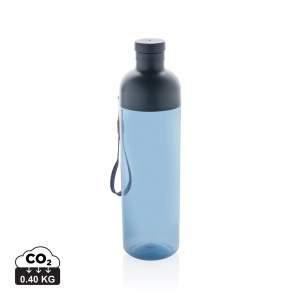
Imagine two companies — both give away a branded water bottle. The first gives a lightweight, plastic single-use bottle with a printed logo. The second gives a metal thermal bottle with laser engraving. Both bottles serve the same function.
But the messages they send are completely different. The first says: “We had a budget and we spent it.” The second says: “We invest in quality — and in you.” The recipient will likely use the metal bottle for months or years — and think of you with every sip.
Metal is a material that speaks for itself. Its weight, cool touch, and durability convey a message of quality, reliability, and long-term thinking. Companies that choose metal promotional gifts are often those that want to be perceived as premium, professional, or innovative.
A plastic ballpoint pen might cost a few cents. A metal one costs significantly more. But the question is not just about price — the question is what the recipient does with the pen. A plastic pen often ends up in a drawer or bin within a few weeks. A metal pen that sits comfortably in the hand, has the right weight and a quality mechanism, becomes an item someone genuinely uses every day.
For companies in finance, law, or consulting, a metal pen is an extension of a professional image. For companies with a low budget and high volume of gifting, a plastic pen may be a perfectly acceptable solution.




For companies that communicate values such as sustainability, minimalism, or social responsibility, recycled paper is an excellent choice. Notebooks, folders, packaging, and covers made from recycled paper feel authentic and thoughtful. They work particularly well for companies in education, the environment, the non-profit sector, or creative industries — where simplicity is not a shortcoming but a value.
Many wonder whether recipients even notice the difference between a recycled and a standard notebook. The answer is: often, yes. Recycled paper frequently has a slightly different texture, a slightly brownish or cream color, and a feel that differs from bright white glossy paper.
This difference is not a flaw — on the contrary, for the right audience, this authenticity is precisely what adds value to the gift. When you include a brief note about the notebook’s materials, it signals to the recipient that your company acts with intention.
Textile gifts — bags, t-shirts, towels, tote bags — are among the most widely used promotional products. The reason is simple: they are practical and visible. When someone carries your bag around town, they become a walking advertisement for your brand. The material the textile is made from, however, tells people what kind of brand you represent.
Organic cotton signals care for health and the environment. Polyester signals low cost and mass production. For companies striving for authenticity and quality, the choice of textile material is a key decision.
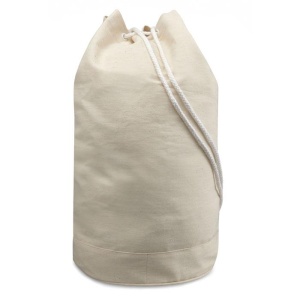
Two bags with the same design and the same logo — one made from organic cotton, the other from polyester. At first glance they look similar, but they feel different in the hand. The organic cotton bag is softer, heavier, more pleasant to the touch. The polyester bag is lighter, with a more plastic feel.
For companies in fashion, healthcare, the food industry, or the sustainability sector, a quality bag is part of the brand story. For companies distributing gifts in large quantities without particular emphasis on material, a polyester bag may represent a more practical choice. The question is: what do you want the recipient to feel — and what should they think of you?
Before ordering promotional gifts, ask yourself a few key questions:
The answers to these questions will help you narrow down your choices and avoid decisions that contradict your values. The chosen material and your message must go hand in hand. If your company talks about sustainability but gives away plastic gifts, that inconsistency will be noticed. If your company communicates a premium offering but gives away cheap gifts made from poor materials, the recipient will feel it.
The best promotional gifts are those where material, form, function, and message form a unified whole. When a recipient picks up a gift and feels a quality that matches your message, you have achieved exactly what you set out to do.
A promotional gift is not just an object. It is a physical embodiment of your brand. The material you choose speaks to your values, your quality, and how you regard the recipient. Plastic, metal, bamboo, recycled paper, organic cotton — every material carries its own message.
The task of every company is to align that message with what it wants to tell the world about itself. The next time you stand before a decision about a promotional gift, ask yourself not just what the gift will do — but what it will say.
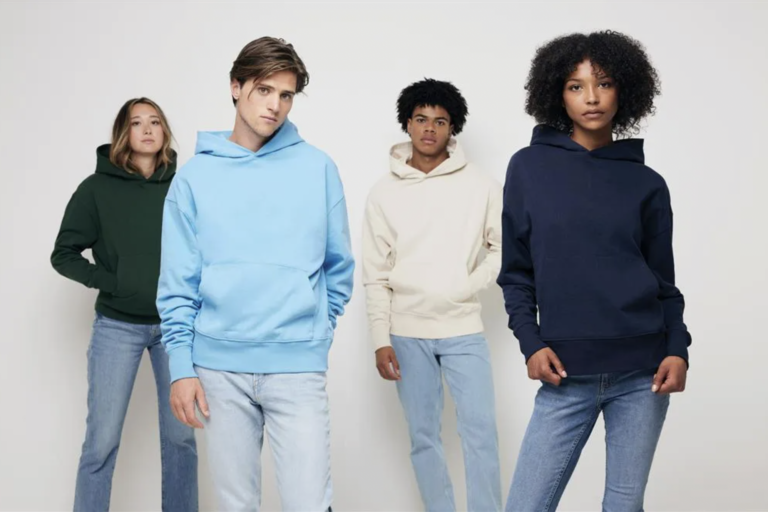
The colder months bring specific challenges, but also exceptional opportunities in marketing and brand building. As temperatures drop, people look…
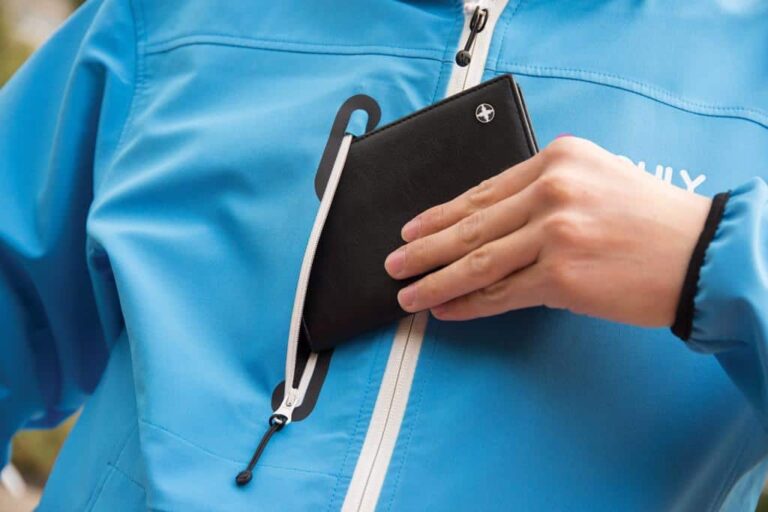
The modern market for promotional and business gifts has been changing rapidly in recent years, as traditional printed materials, simple…

Corporate gifting has long been considered one of the key building blocks of good personal and business relationships. However, the…

Business gift-giving has long been considered a refined form of communication between companies, partners, and clients. Although at first glance…
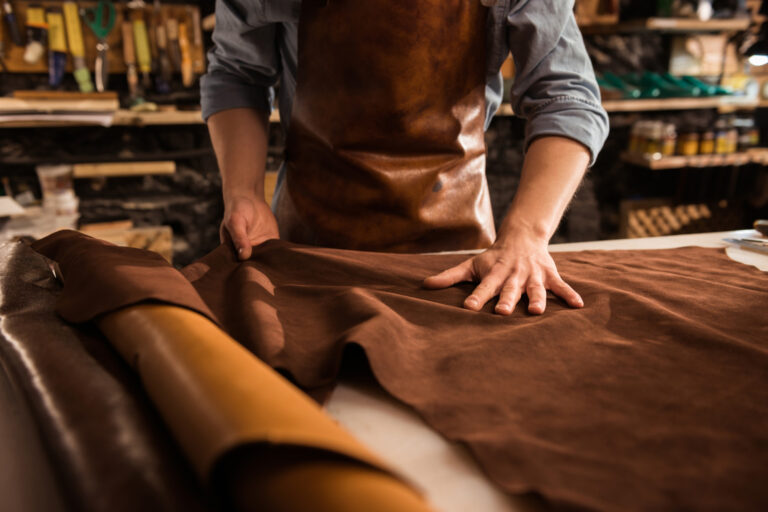
Every business gift is much more than just a useful item with a printed logo. It is a physical extension…
The colder months bring specific challenges, but also exceptional opportunities in marketing and brand building. As temperatures drop, people look…
The modern market for promotional and business gifts has been changing rapidly in recent years, as traditional printed materials, simple…
Corporate gifting has long been considered one of the key building blocks of good personal and business relationships. However, the…
Business gift-giving has long been considered a refined form of communication between companies, partners, and clients. Although at first glance…
Every business gift is much more than just a useful item with a printed logo. It is a physical extension…

The modern business environment is changing faster than ever before, and with it, the expectations of the people who form the core of every successful…

The modern workspace has changed dramatically over the last few years. Companies around the world have realized that work is no longer tied to just…

Workplace health is no longer merely an add-on to business operations; it has become a strategic priority for every responsible and long-term-oriented company.

Hybrid work, which combines office-based and remote work, has become a reality for many companies worldwide. While this way of working offers numerous benefits, it…

The beginning of the calendar year in companies often also marks the start of a new business cycle. This is the time when key decisions…

Minimalism is no longer just an aesthetic trend but an effective work approach that reduces overwhelm and increases mental clarity.

We all know how annoying it is when small things interrupt our work. And now research confirms it — after interruptions, people often need several…

Workdays are often long and full of tasks that require a lot of attention and energy. Because of this, we can easily forget how important…

Promotional gifts have long been a strategic tool for businesses, allowing them to create lasting impressions and strengthen their relationships with clients, partners, and employees.

Good communication in the workplace is the foundation of successful business operations. It enables clear articulation of goals, efficient task allocation, and swift problem-solving. This…

The last decade has seen a significant increase in awareness surrounding mental wellness. People are actively seeking ways to manage stress, anxiety, and overall mental…

For health-conscious individuals and fitness enthusiasts, staying active and maintaining a balanced lifestyle is not just a passing interest but a core value that guides…

Quality sleep has become a luxury for many. However, the importance of a good night’s sleep cannot be overstated. Adequate sleep not only rejuvenates the…

In today’s fast-paced and demanding work environment, achieving work-life balance is more crucial than ever. Striking a healthy equilibrium between professional responsibilities and personal well-being…

We have reached the last week of this year; the New Year holidays are upon us, dedicated to celebrating and spending time with our loved…

In the past couple of years, sustainability has become a major topic in all parts of life – home living, business management, and even diet.…

Cold weather can cause a change in appetite, as we exchange light summer salads and grilled dishes for more hearty meals that keep us full…

Many people think that higher pay and perks—like paid lunches—are directly related to job satisfaction. In fact, it is the interconnections that are an important…

The impact of the pandemic on international trade makes buying local more important than ever. This period over the past few years has been one…

Customer loyalty is a key driver of business growth, as repeat customers are generally the most predictable source of revenue and have a lower cost…

Every company needs to have goals aimed at increasing productivity in the workplace. The more productive your business, the easier it is to increase profits…

A healthy work environment is exactly what you need to maintain a positive well-being in your office, even when stress levels are extremely high. The…

We live in a world where we are constantly in a hurry – we are in a hurry on our way to work, to school,…

We’re finally witnessing the arrival of the new year – to be completely honest, it’s here much sooner than we expected. Sometimes it seems that…

From the moment you step into the office in the morning, you’re probably planning all the things you plan to do throughout the day. But…

Achieving our goals is rarely easy, which is why it is important to know how to maintain our motivation in stressful and overburdened situations –…

Our world faces countless problems every day – from poverty and hunger, wars and injustice, to climate change. Despite constant effort and endeavour, unfortunately none…

Many people want to enter their New Year with a healthier lifestyle – and why not start working on your New Year’s vows today? It…

I know, I know, you’ve read the title and now you may be wondering what ‘zero waste’ is all about. What does this phrase actually…

Have you been snoring and coughing more frequently lately? Have you been experiencing headaches as well? Do you feel more tired than usual? Are you…

Everyone in the world is becoming increasingly aware of the important role healthy habits play not only in relation to our health, but also in…

Employees are the most important asset of a company, which is something even an inexperienced entrepreneur is aware of. And by investing in the well-being…

Few of us can resist the sweet taste of chocolate. It is not uncommon to impulsively buy a whole bunch of candy in a store.…

Many of us have faced a new challenge in the past year – how to do our job well from home? Sticky notes are multiplying…

Cold winter months are right around the corner, soon to be knocking on our doors. Well, if you ask me, some cold mornings feel like…